How Long Does a House Extension Take in Phnom Penh?The Complete Homeowner Guide to Planning, Design, Construction, and Property Value Improvement


Introduction
For many homeowners in Phnom Penh, there comes a time when the house that once felt spacious and comfortable no longer meets the needs of the family.
Perhaps children need their own bedrooms. Maybe parents move in and require additional living space. Some families need a larger kitchen, a home office, or a more functional living area. Others simply want to improve the quality and value of their property without the expense and disruption of moving to a new home.
At this point, homeowners often face an important question:
Should I move to a new house, renovate my existing home, or build a house extension?
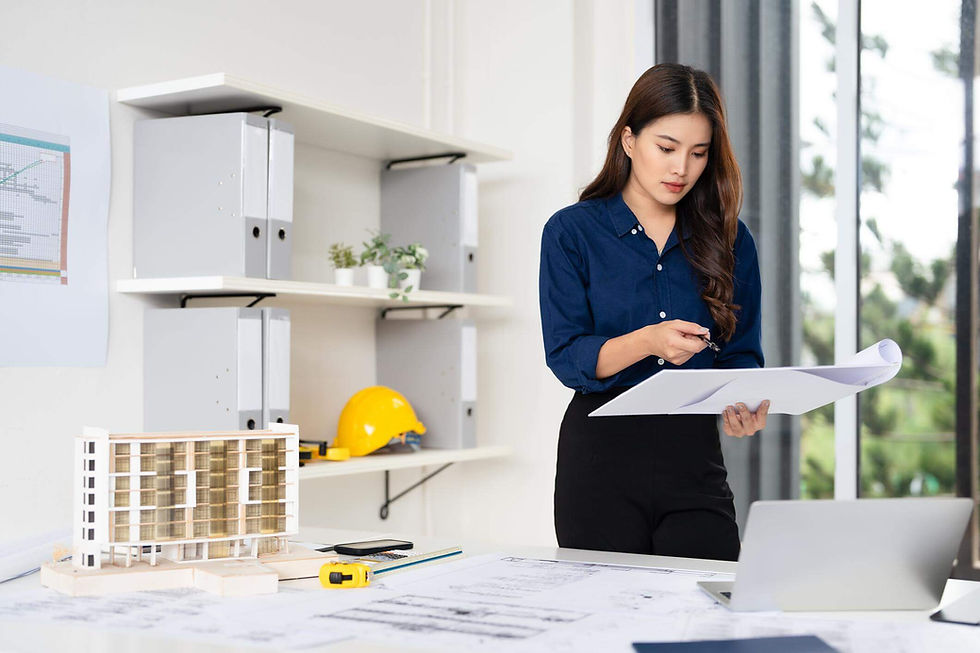
For many families, a house extension becomes the most practical and cost-effective solution.
A well-planned house extension allows homeowners to increase living space, improve functionality, and enhance property value while continuing to enjoy the location and neighborhood they already love.
However, before beginning any project, another important question arises:

How long does a house extension take in Phnom Penh?
The answer depends on many factors, including project size, design complexity, structural requirements, material selection, and project management.
This guide explains the complete house extension process, common challenges, realistic timelines, and expert advice from SALA DECOR to help homeowners make informed decisions before construction begins.

What Is a House Extension?
A house extension is the process of adding new space to an existing home.
Unlike building a completely new house, a house extension works with the existing structure and expands it to meet new needs.
Common examples include:
Extending a kitchen
Adding a bedroom
Expanding a living room
Creating a home office
Building a second floor
Adding a family room
Creating outdoor covered spaces
A successful extension should feel like a natural part of the original house rather than an addition that appears disconnected.
The goal is not simply to add square meters.
The goal is to improve how people live within their homes.https://www.saladecor.com/home-extension-in-phnom-penh

Why Homeowners Choose House Extensions Instead of Moving
Many homeowners initially assume that moving to a larger home is the easiest solution.
However, moving involves numerous costs and challenges.
These may include:
Real estate agent fees
Legal expenses
Relocation costs
New furniture requirements
School changes
Longer commuting distances
Emotional disruption
https://www.saladecor.com/home-extension-in-phnom-penh

A house extension often provides a more efficient alternative.
Instead of starting over somewhere else, homeowners can improve the property they already own.
Benefits of a house extension include:

More Living Space
Families can create additional bedrooms, larger kitchens, expanded living areas, or flexible workspaces.
Increased Property Value
Well-designed extensions often increase the market value of a property.
Better Lifestyle
The home becomes more functional and comfortable without changing neighborhoods.
Cost Efficiency
In many situations, extending an existing property can be more economical than purchasing a new home.https://www.saladecor.com/home-extension-in-phnom-penh

House Extension vs Home Renovation
Homeowners often confuse house extensions and renovations.
Although they are related, they are not the same.
House Renovation
Renovation focuses on improving existing spaces.
Examples include:
New flooring
Bathroom upgrades
Kitchen remodeling
Interior improvements
Painting and finishes
The overall size of the house remains largely unchanged.
House Extension
A house extension increases the size of the property.
Examples include:
Additional rooms
Expanded living spaces
New structural additions
Second-story construction
In reality, many projects combine both.
For example, a homeowner may build a new extension while simultaneously renovating existing areas to create a seamless result.
This is why extension and renovation projects often work together.https://www.saladecor.com/home-extension-in-phnom-penh

When Should You Consider a House Extension?
Not every homeowner needs an extension.
However, there are situations where extending a home makes excellent sense.
Your Family Is Growing
As families grow, living space requirements change.
Additional bedrooms or larger common areas may become necessary.
You Need More Functional Space
Remote work, home businesses, and changing lifestyles often create new space requirements.
You Love Your Location
Many homeowners are happy with their neighborhood and do not want to move.
Property Values Are Increasing
Improving an existing property can be a strategic investment.
You Want to Improve Lifestyle Quality
A better kitchen, larger living room, or more comfortable family area can significantly improve daily life.https://www.saladecor.com/home-extension-in-phnom-penh

How Long Does a House Extension Take in Phnom Penh?
This is one of the most common questions homeowners ask.
The answer depends on project size and complexity.
Small House Extensions
Examples:
Kitchen extensions
Small room additions
Covered outdoor areas
Typical Duration:
4–8 weeks
Medium House Extensions
Examples:
Additional bedroom
Home office
Family room extension
Typical Duration:
1–3 months
Large House Extensions
Examples:
Multi-room additions
Structural modifications
Major floor plan changes
Typical Duration:
2–4 months
Full Home Extension and Renovation Projects
Examples:
Complete home transformation
Structural remodeling
Large-scale renovation and extension
Typical Duration:
3–6 months or more
Every project is unique.
Professional planning is essential to establish realistic expectations.

Why Construction Timelines Matter
Many homeowners focus heavily on budget but underestimate the importance of scheduling.
A realistic timeline helps homeowners:
Plan family activities
Schedule material purchases
Coordinate contractors
Reduce project stress
Manage expectations
Understanding the timeline before construction begins can prevent many problems later.https://www.saladecor.com/home-extension-in-phnom-penh

A Good House Extension Starts Before Construction Begins
One of the biggest misconceptions in construction is the belief that projects begin when workers arrive on site.
In reality, successful projects begin much earlier.
At SALA DECOR, we believe:
A good construction project starts on paper.
Before construction begins, homeowners should have:
Clear design drawings
Defined project goals
Material selections
Budget planning
Construction schedules
Scope of work documentation
Many construction problems can be traced back to poor planning rather than poor workmanship.
The quality of decisions made before construction often determines the success of the entire project.

The Importance of Planning
Planning is not merely paperwork.
Planning is risk management.
Proper planning helps reduce:
Delays
Cost overruns
Material shortages
Design conflicts
Construction defects
When planning is completed correctly, construction becomes far more predictable and efficient.
This is why experienced professionals spend significant time preparing before construction begins.
Because the goal is not simply to build.
The goal is to build correctly.
he House Extension Process: Planning, Design, Construction, and Project Management
Understanding the Real Construction Process
Many homeowners only see the visible parts of construction.
They see workers installing tiles, painting walls, or building structures.
What they often do not see is the planning, coordination, and decision-making that happens behind the scenes.
In reality, construction is a process.
Each stage depends on the stage before it.
When the sequence is correct, projects move smoothly.
When the sequence is broken, delays, defects, and additional costs begin to appear.
This is why experienced construction professionals focus not only on building but also on managing the entire process
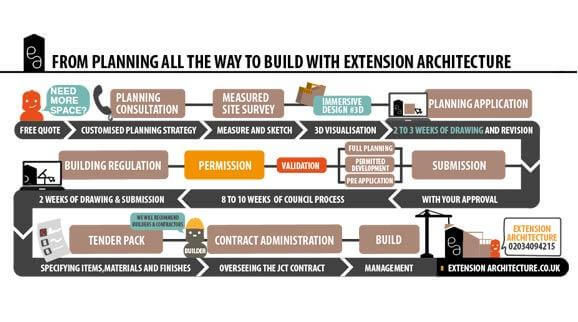
Step 1: Site Survey and Existing Conditions Assessment
Before any design work begins, the existing property must be studied carefully.
This stage typically includes:
Site measurements
Existing structure inspection
Utility assessment
Access evaluation
Drainage review
Existing condition documentation
The purpose is simple:
To understand the limitations and opportunities of the property before making decisions.
Many construction problems occur because assumptions are made too early.
Good projects start with accurate information.
Step 2: Design Development
Design is much more than creating beautiful drawings.
Good design solves problems.
At this stage, homeowners and designers work together to answer important questions:
How much additional space is needed?
How will people move through the space?
How will natural light enter the extension?
How will the new area connect with the existing house?
Will the extension improve daily life?
A successful extension should feel like a natural part of the home.
It should not feel like an afterthought.

Step 3: Construction Drawings
One of the biggest mistakes homeowners make is underestimating the importance of construction drawings.
A drawing is not simply a picture.
A drawing is a communication tool.
It tells everyone involved exactly what needs to be built.
Construction drawings help align:
Homeowners
Designers
Contractors
Site supervisors
Tradespeople
Without clear drawings, every person may interpret the project differently.
That creates confusion.
Confusion creates mistakes.
Mistakes create delays.

Why Construction Drawings Matter
At SALA DECOR, we believe that many project problems can be prevented before construction begins.
Clear drawings help answer questions before workers arrive on site.
For example:
Wall locations
Door positions
Window sizes
Ceiling heights
Material specifications
Electrical layouts
Plumbing layouts
When decisions are made early, construction becomes more efficient.

Step 4: BOQ and Material Planning
A Bill of Quantities (BOQ) is one of the most important project management tools.
A BOQ helps define:
Materials
Quantities
Budget expectations
Construction scope
Many homeowners focus only on the final cost.
However, understanding what is included in the project is equally important.
A detailed BOQ helps reduce misunderstandings and creates a clearer path forward.

Why Material Selection Should Happen Early
One of the most common causes of construction delays is late material selection.
Imagine this situation:
Construction is progressing smoothly.
The structure is complete.
The walls are ready.
The flooring needs to be installed.
Then the homeowner decides to change materials.
Suddenly:
Orders must be revised.
Suppliers must be contacted.
Lead times increase.
Installation schedules change.
A small decision can create a large delay.
This is why early material selection is critical.

Construction Is About Sequence
Many people think construction is simply about working harder and faster.
In reality, construction is largely about sequence.
A project that follows the correct sequence often performs better than a project with more workers.
Construction is similar to building a system.
Each stage supports the next.
A Typical House Extension Construction Sequence
Structural Work
The project begins with:
Foundations
Columns
Beams
Structural slabs
The structure forms the backbone of the extension.
Without a strong structure, nothing else matters.

Roofing
After the structure is completed, roofing work begins.
The roof protects the work area from weather and creates a controlled environment for the next stages.
A completed roof helps improve efficiency throughout the remainder of the project.
Electrical and Plumbing Systems
Once the structure is protected, building systems can be installed.
These include:
Electrical wiring
Plumbing pipes
Drainage systems
Air-conditioning infrastructure
This stage must be completed before ceilings and walls are closed.
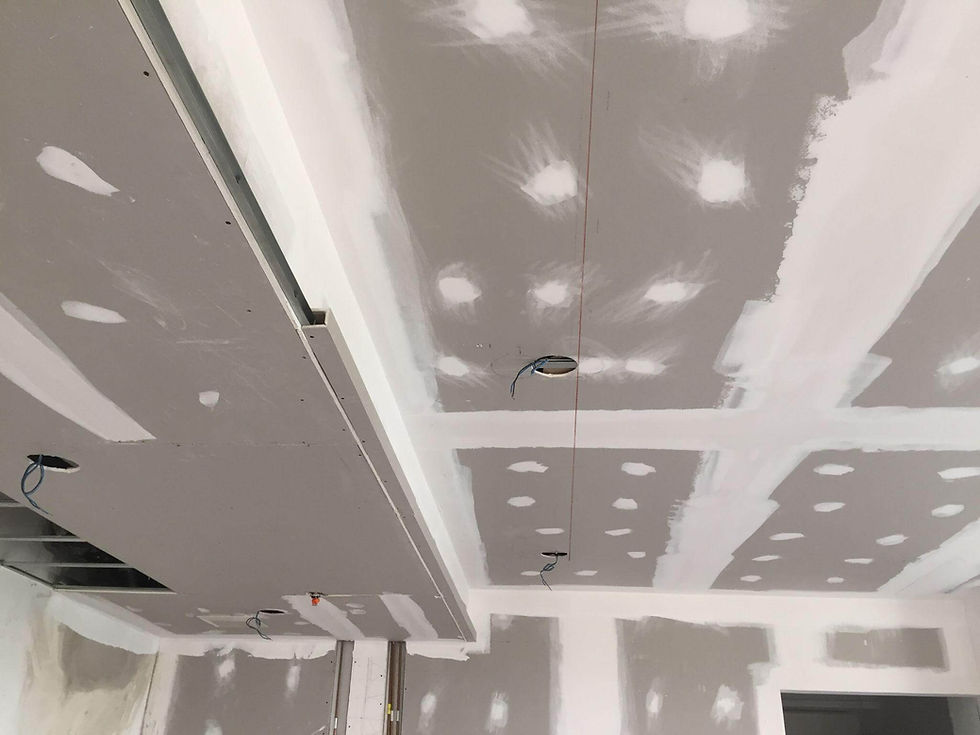
Ceiling and Wall Construction
After systems are installed and inspected:
Ceilings are installed
Walls are completed
Surface preparation begins
At this stage, the extension begins to resemble a finished space.

Flooring
Flooring is typically completed after major construction activities are finished.
This helps reduce the risk of damage.
Doors and Windows
Doors and windows help secure the project and prepare the space for final finishing.
Final Finishing
The final stage includes:
Painting
Hardware installation
Cleaning
Quality inspections
Client walkthroughs
This stage transforms the project from a construction site into a usable living space.
Why Construction Projects Get Delayed
One of the most common questions homeowners ask is:
"Why do construction projects take longer than expected?"
Many people assume delays are caused by weather, labor shortages, or technical problems.
While these factors can contribute, they are often not the primary cause.
The #1 Cause of Construction Delays
Based on our experience, the biggest cause of delays is often not construction itself.
It is decision-making.
Many projects begin with one plan.
As construction progresses:
Designs change.
Materials change.
Layouts change.
Finishes change.
Each change creates consequences.
Construction may need to stop.
Materials may need to be reordered.
Completed work may need to be modified.
Schedules may need to be adjusted.
This creates a chain reaction throughout the project.
At SALA DECOR, we often explain it this way:

Most construction delays are not caused by construction. They are caused by decisions.
The Cost of Changing Your Mind
Imagine a project moving smoothly through three stages:
Stage 1 → Stage 2 → Stage 3
Then a major design change occurs.
Instead of continuing forward, the project may need to return to Stage 1.
The team must review drawings.
Materials may need replacement.
Schedules may require revision.
What appears to be a small change can create significant delays.
This is why clear decisions before construction are so valuable.
Multiple Contractors: Advantages and Challenges
Some homeowners prefer to hire multiple specialists.
For example:
One electrical contractor
One plumbing contractor
One cabinetry contractor
One air-conditioning contractor
While this can work successfully, it introduces additional complexity.
Each contractor has:
Different schedules
Different priorities
Different workflows
Without strong coordination, delays can occur.
The Importance of Project Leadership
Construction projects work best when someone is responsible for coordinating the entire process.
When multiple parties are involved, someone must manage:
Scheduling
Communication
Quality control
Problem solving
Without clear leadership, even highly skilled workers can struggle to work efficiently together.
Quality, Defect Prevention, Cost Considerations, and Why Planning Matters More Than Speed
Why Construction Defects Happen
Most homeowners assume that construction defects are caused by poor workmanship.
Sometimes that is true.
However, in many projects, defects occur even when skilled workers are involved.
The reason is simple:
Construction defects are often caused by poor planning, poor sequencing, and poor coordination.
A project can have talented workers and still experience problems if the process is not properly managed.
This is why project management is just as important as construction skills.
Understanding Construction Defects
A defect is any issue that affects quality, appearance, functionality, or long-term performance.
Examples include:
Cracked finishes
Uneven flooring
Damaged surfaces
Poor paint finishes
Misaligned doors
Plumbing leaks
Electrical issues
Water infiltration
Many defects are preventable.
The key is understanding where they come from.

The Hidden Cause of Many Defects
One of the biggest causes of defects is construction work being performed out of sequence.
Imagine a completed floor.
The flooring looks perfect.
Then another trade enters the area and continues working.
Materials are moved.
Tools are dragged across the surface.
Workers walk through finished areas.
Suddenly the finished floor becomes damaged.
The flooring itself was not defective.
The process was.
This principle applies to many construction activities.
Why Work Sequence Matters
At SALA DECOR, we believe construction should follow a logical sequence.
Every stage should prepare for the next stage.
The goal is simple:
Move forward.
Do not move backward.
When construction teams constantly return to completed areas, the risk of defects increases dramatically.
This is why sequencing matters.
Protecting Completed Work
One of the most overlooked aspects of construction quality is protecting finished work.
Once an area is completed, it should be protected whenever possible.
This reduces:
Damage
Rework
Delays
Additional costs
The fewer people who enter a completed area, the lower the risk of defects.
This principle may seem simple, but it has a major impact on project quality.
Quality Control Is a Daily Process
Many homeowners think quality control happens at the end of a project.
In reality, quality control should happen every day.
Every phase should be inspected before the next phase begins.
For example:
Before flooring begins:
Plumbing should be checked.
Electrical work should be verified.
Structural work should be completed.
Before painting begins:
Walls should be inspected.
Surface preparation should be reviewed.
Repairs should be completed.
Small issues are easier to fix early than later.
Why Planning Matters More Than Speed
Many homeowners ask:
"How quickly can you finish the project?"
While speed is important, it should never be the primary goal.
Fast construction that creates future problems is not efficient.
A project should be:
Planned properly
Built correctly
Delivered with quality
At SALA DECOR, we believe:
Speed without planning creates problems. Planning creates efficiency.
A well-organized project often finishes faster than a rushed project because fewer mistakes occur along the way.
House Extension vs Moving to a New Home
When families need more space, they often face a major decision:
Should we move?
Or should we extend our existing home?
There is no universal answer.
However, understanding the advantages of both options helps homeowners make informed decisions.
Advantages of Moving
Moving may provide:
A completely new property
Different location options
Modern facilities
Larger land area
However, moving also involves:
Higher purchase costs
Legal expenses
Relocation challenges
Lifestyle adjustments
Advantages of House Extensions
House extensions offer different benefits.
Homeowners can:
Stay in a familiar neighborhood
Keep children in the same schools
Maintain existing community relationships
Improve property value
Customize spaces to specific needs
For many families, extending an existing home provides a more practical long-term solution.

House Extension Cost Considerations
One of the most common questions homeowners ask is:
"How much will a house extension cost?"
The answer depends on several factors.
Size of the Extension
Larger extensions naturally require:
More materials
More labor
More time
Structural Complexity
Projects involving:
New foundations
Large spans
Second-story additions
typically require additional structural work.
Material Selection
Material choices significantly affect project budgets.
Examples include:
Flooring materials
Roofing systems
Windows
Doors
Fixtures
Finishes
Different materials create different cost levels.
Building Systems
Electrical, plumbing, and air-conditioning requirements also affect budgets.
More complex systems generally increase project costs.
Design Complexity
Unique architectural features often require:
Additional labor
Specialized skills
Custom fabrication
This can increase both cost and duration.

How Homeowners Can Keep Their Project on Schedule
Based on our experience, homeowners can significantly improve project outcomes by following a few simple principles.
1. Finalize the Design Before Construction
The clearer the design, the smoother the project.
2. Select Materials Early
Early material selection reduces uncertainty and delays.
3. Avoid Frequent Changes
Every change has consequences.
Changes affect:
Budget
Schedule
Workflow
The fewer changes made during construction, the more predictable the project becomes.
4. Establish a Clear Decision-Maker
Projects move faster when decisions come from a single source.
Too many decision-makers often create confusion.
5. Work With Professionals Who Understand the Entire Process
Construction is more than building.
It involves:
Planning
Coordination
Scheduling
Quality control
Problem solving
Experience matters.

Frequently Asked Questions
How long does a house extension take in Phnom Penh?
Most projects take between 1 and 4 months depending on size and complexity.
Can I live in my house during construction?
In many cases, yes.
However, it depends on the scope of work and safety considerations.
Is a house extension cheaper than moving?
Often, yes.
However, every situation is different and should be evaluated individually.
Will a house extension increase property value?
A well-designed extension can significantly improve property value and functionality.
What is the biggest cause of construction delays?
In our experience, changes in design, materials, and project decisions are often the primary causes of delays.
Should I hire multiple contractors?
It depends on the project.
However, multiple contractors generally require stronger coordination and project management.
Why are construction drawings important?
Construction drawings help ensure everyone involved understands exactly what needs to be built.
What is a BOQ?
A Bill of Quantities (BOQ) is a detailed document that outlines materials, quantities, and project scope.
Why SALA DECOR?
At SALA DECOR, we do not see ourselves as simply designers or contractors.
We believe homeowners should not have to navigate important property decisions alone.
Whether a homeowner is considering:
A house extension
A renovation
A facade upgrade
A property improvement project
our role is to help identify the right solution.
Our goal is not simply to build additional space.
Our goal is to help homeowners improve the quality, functionality, and long-term value of their homes.

Conclusion
A successful house extension is about much more than adding square meters.
It is about creating a better living environment for the people who call that house home.
The most successful projects are not necessarily the fastest.
They are the projects that are properly planned, carefully managed, and thoughtfully executed.
Before construction begins, homeowners should focus on:
Clear goals
Strong design
Proper planning
Realistic timelines
Effective communication
Because in construction, as in many areas of life, the quality of the result is often determined long before the work begins.
At SALA DECOR, we believe:

A good construction project starts on paper.
And when planning, design, and construction work together, homeowners can create spaces that improve not only their houses, but also the way they live for years to come.


Comments