A Great Hotel Begins with Its Story Hotel Interior Design & Renovation in Phnom Penh, Cambodia

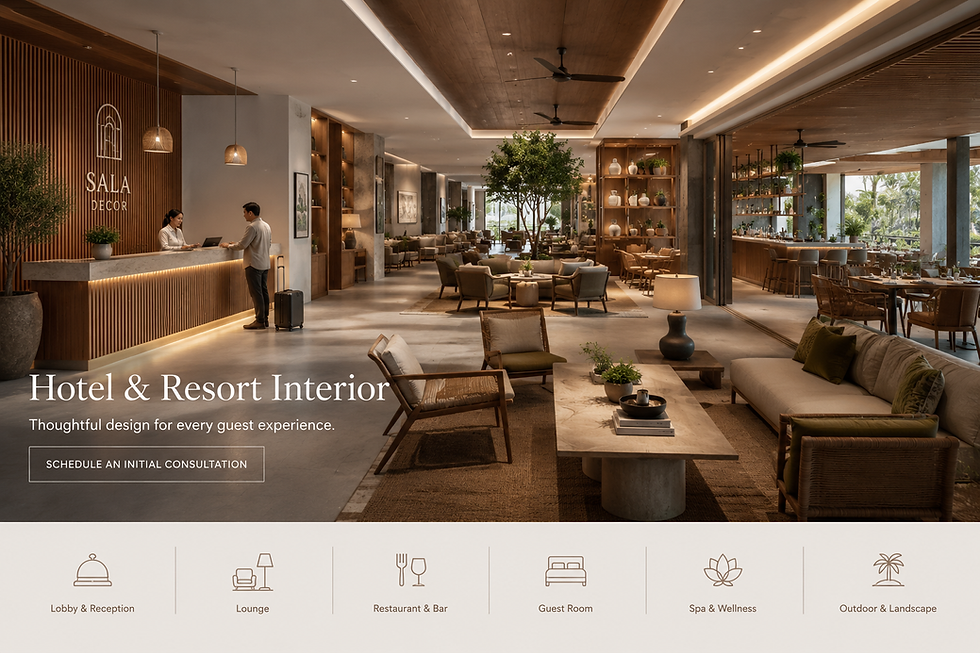
Beautiful hotels are everywhere.
Memorable hotels are rare.
The difference is not simply better furniture, more expensive materials, or a larger budget. It begins with a clear idea—a story that connects the hotel to its location, its culture, and the experience it wants to create for every guest.
Before designing a hotel, here are seven important principles every hotel owner and investor should consider.

1. Start with the Place, Not the Building
Every destination has its own identity.
The surrounding landscape, local culture, history, climate, and architecture should become the foundation of the design.
Rather than importing a design style from somewhere else, the most successful hotels are those that reflect the character of their location.https://www.saladecor.com/hotel-resort-interior

2. Every Hotel Should Tell a Story
A hotel is more than a building with guest rooms.
It should communicate one consistent story through its architecture, interior design, materials, lighting, artwork, landscaping, and even furniture.
When every element works together, guests remember the experience—not just the room.https://www.saladecor.com/hotel-resort-interior

3. Design the Guest Journey
Think beyond individual spaces.
Consider the complete guest experience:
Arrival
Reception
Lobby
Corridors
Guest Rooms
Restaurants
Amenities
Check-out
Every step should feel intentional, comfortable, and easy to navigate.
Great hotel design creates a seamless journey from arrival to departure.

4. Public Spaces Create Lasting Impressions
Guests often remember the spaces they spend time in—not just where they sleep.
Lobbies, lounges, restaurants, cafés, rooftop bars, gardens, and swimming pools all contribute to the hotel's identity.
These shared spaces often become the most photographed and memorable parts of the property.https://www.saladecor.com/hotel-resort-interior

5. Choose Materials That Belong to the Place
Materials should do more than look beautiful.
They should reflect the local environment, withstand daily use, and age gracefully over time.
Natural stone, timber, locally crafted finishes, and regionally inspired textures often create a stronger sense of place than imported luxury materials.

6. Design for Operations, Not Just for Guests
Behind every great guest experience is an efficient operational system.
Service corridors, housekeeping areas, storage rooms, laundry facilities, loading zones, staff circulation, and maintenance spaces should all be carefully planned.
A hotel that operates efficiently every day is just as important as one that looks impressive on opening day.https://www.saladecor.com/hotel-resort-interior

7. Plan for the Future
Hotels evolve over time.
Technology changes.
Guest expectations change.
Businesses grow.
A flexible design allows rooms, public spaces, and building systems to adapt without requiring major renovations.
Planning ahead today helps protect your investment for years to come.https://www.saladecor.com/hotel-resort-interior

Conclusion
A successful hotel is not defined by luxury alone.
It is defined by thoughtful planning, efficient operations, memorable guest experiences, and a strong connection to its location.
When design begins with a story instead of decoration, the result is more than a beautiful hotel—it becomes a destination that guests remember long after they leave.

សណ្ឋាគារល្អ ចាប់ផ្តើមពីរឿងរ៉ាវរបស់ទីកន្លែង
សណ្ឋាគារស្អាតមានច្រើន ប៉ុន្តែសណ្ឋាគារដែលភ្ញៀវចងចាំ មានមិនច្រើនទេ។
ភាពខុសគ្នាមិនមែនស្ថិតនៅលើគ្រឿងសង្ហារឹមថ្លៃៗ ឬការតុបតែងប្រណីតប៉ុណ្ណោះទេ ប៉ុន្តែស្ថិតនៅលើការរៀបចំផែនការដែលល្អ និងការបង្កើតអត្តសញ្ញាណដែលឆ្លុះបញ្ចាំងពីទីកន្លែងនោះ។
មុនចាប់ផ្តើមរចនាសណ្ឋាគារ មានចំណុចសំខាន់ៗដែលម្ចាស់គម្រោង និងអ្នកវិនិយោគគួរពិចារណា។https://www.saladecor.com/hotel-resort-interior
1. ចាប់ផ្តើមពីទីកន្លែង មិនមែនពីអគារ

ទីតាំងនីមួយៗមានអត្តសញ្ញាណផ្ទាល់ខ្លួន។
ធម្មជាតិ វប្បធម៌ ប្រវត្តិសាស្ត្រ អាកាសធាតុ និងសម្ភារៈក្នុងតំបន់ គួរត្រូវបានយកមកធ្វើជាមូលដ្ឋាននៃការរចនា។
សណ្ឋាគារដែលទទួលបានជោគជ័យ គឺជាសណ្ឋាគារដែលភ្ញៀវអាចមានអារម្មណ៍ថា ពួកគេកំពុងស្នាក់នៅក្នុងទីកន្លែងនោះពិតប្រាកដ។https://www.saladecor.com/hotel-resort-interior
2. សណ្ឋាគារគ្រប់แห่งគួរតែមានរឿងរ៉ាវ
ការរចនាសណ្ឋាគារ មិនមែនគ្រាន់តែបែងចែកបន្ទប់ស្នាក់នៅប៉ុណ្ណោះទេ។
ស្ថាបត្យកម្ម ការរចនាផ្ទៃក្នុង ពន្លឺ សម្ភារៈ សិល្បៈ និងទេសភាព គួរតែប្រាប់រឿងតែមួយ ដើម្បីបង្កើតបទពិសោធន៍ដែលភ្ញៀវអាចចងចាំបាន។

3. គិតពីដំណើររបស់ភ្ញៀវ
ចាប់ពីពេលភ្ញៀវមកដល់ រហូតដល់ពេលចាកចេញ ពួកគេគួរតែទទួលបានបទពិសោធន៍ដែលរលូន និងងាយស្រួល។
ការរៀបចំ Lobby ផ្លូវដើរ បន្ទប់ស្នាក់នៅ ភោជនីយដ្ឋាន និងតំបន់សាធារណៈ គួរតែភ្ជាប់គ្នាដោយមានហេតុផល។
4. តំបន់សាធារណៈ គឺជាកន្លែងបង្កើតអនុស្សាវរីយ៍
ភ្ញៀវភាគច្រើន ចងចាំ Lobby ហាងកាហ្វេ ភោជនីយដ្ឋាន អាងហែលទឹក ឬ Rooftop Bar ច្រើនជាងបន្ទប់ស្នាក់នៅ។
ការរចនាតំបន់ទាំងនេះឱ្យមានអត្តសញ្ញាណ នឹងធ្វើឱ្យសណ្ឋាគារមានភាពខុសប្លែកពីគេ។https://www.saladecor.com/hotel-resort-interior

5. ជ្រើសរើសសម្ភារៈដែលសមនឹងទីកន្លែង
សម្ភារៈមិនគួរតែស្អាតតែប៉ុណ្ណោះទេ ប៉ុន្តែត្រូវប្រើប្រាស់បានយូរ ថែទាំងាយ និងសមស្របនឹងបរិយាកាសក្នុងតំបន់។
ការប្រើប្រាស់សម្ភារៈក្នុងស្រុក ក៏អាចបង្កើតអត្តសញ្ញាណពិសេស និងគាំទ្រសហគមន៍ផងដែរ។https://www.saladecor.com/hotel-resort-interior

6. រចនាសម្រាប់ការដំណើរការ មិនមែនសម្រាប់តែរូបភាពស្អាត
នៅពីក្រោយសណ្ឋាគារដែលដំណើរការល្អ គឺមានការរៀបចំប្រព័ន្ធការងារដែលមានប្រសិទ្ធភាព។
បន្ទប់ស្តុក ផ្លូវសេវាកម្ម បន្ទប់បុគ្គលិក កន្លែងបោកគក់ និងតំបន់ថែទាំ គួរតែត្រូវបានគិតគូរតាំងពីដំណាក់កាលរចនា។

7. គិតដល់អនាគត
សណ្ឋាគារត្រូវបានប្រើប្រាស់អស់រយៈពេលជាច្រើនឆ្នាំ។
ដូច្នេះ ការរចនាគួរតែអាចគាំទ្រការកែលម្អ ការពង្រីក និងការផ្លាស់ប្តូរបច្ចេកវិទ្យានាពេលអនាគត ដោយមិនចាំបាច់ចំណាយថវិកាច្រើនក្នុងការកែប្រែ។https://www.saladecor.com/hotel-resort-interior

សេចក្តីសន្និដ្ឋាន
សណ្ឋាគារល្អ មិនមែនវាស់ត្រឹមតែភាពប្រណីតនោះទេ។
វាត្រូវការការធ្វើផែនការដែលមានគុណភាព ការរៀបចំលំហដែលមានប្រសិទ្ធភាព ការគាំទ្រការដំណើរការអាជីវកម្ម និងការបង្កើតបទពិសោធន៍ដែលភ្ញៀវនឹងចងចាំ។
នៅពេលការរចនាចាប់ផ្តើមពីរឿងរ៉ាវរបស់ទីកន្លែង សណ្ឋាគារនឹងក្លាយជាគោលដៅដែលភ្ញៀវចង់ត្រឡប់មកវិញ មិនមែនគ្រាន់តែជាកន្លែងស្នាក់នៅប៉ុណ្ណោះទេ។


Comments